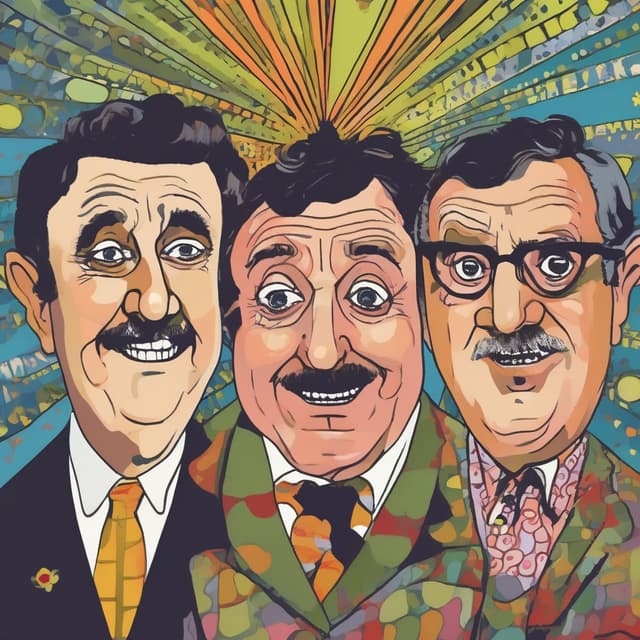
| Genre | Radio comedy |
| Title | The Goon Show |
| Status | Ended |
| Creators | Peter Sellers • Spike Milligan • Harry Secombe |
| Notable for | Surreal, anarchic humor • Biting social satire • Cult following • Influence on later comedians |
| No. of seasons | |
| No. of episodes | |
| Original network | |
| Original release | 28 May 1951 – 5 January 1960 |
| Country of origin | |
| Original language | English |
| Production companies |
The Goon Show was a pioneering British radio comedy program that aired from 1951 to 1960. Created by and starring comedians Peter Sellers, Spike Milligan, and Harry Secombe, the show became known for its anarchic, surreal, and satirical brand of humor that departed sharply from the mainstream comedy of the era. Though initially rejected by the BBC, The Goon Show eventually found a home on an independent radio station and developed a devoted cult following that recognized its groundbreaking influence on British comedy.
The origins of The Goon Show can be traced back to the early post-war years, when former World War II army buddies Sellers, Milligan, and Secombe began collaborating on various radio and stage comedy projects. Drawing on their shared experiences of wartime service, the trio developed an irreverent and iconoclastic comedic style that clashed with the staid, respectable tone of much British humor at the time.
In 1951, the three comedians pitched a pilot for a new radio program to the BBC, but it was promptly rejected as being too bizarre and unorthodox. Undeterred, they took their act to the newly-formed Independent Broadcasting Authority, which greenlit the show for a trial run. The Goon Show debuted in May 1951 to a lukewarm critical reception, with many listeners confused or put off by its anarchic sensibility.
The heart of The Goon Show was the trio of Sellers, Milligan, and Secombe, each bringing a distinct comedic persona to the show:
Peter Sellers was the master of character acting, effortlessly slipping between a vast array of bizarre, pompous, or neurotic characters. His most famous creations included the bumbling Inspector Clouseau-like investigator Superintendent "Bluebottle" and the deranged Major Bloodnok.
Spike Milligan served as the show's principal writer, bringing his surreal, stream-of-consciousness sensibilities to the scripts. His manic, free-associative delivery and knack for non-sequitur humor was a key part of The Goon Show's anarchic style.
Harry Secombe provided a more grounded, everyman presence, often playing the foil to Sellers and Milligan's wilder excesses. His rich, stentorian voice and musical talents were frequently showcased in songs and sketches.
Together, the three Goons wove absurdist narratives involving everything from offbeat spy adventures to parodies of British institutions, all delivered at a breakneck pace.
The Goon Show's distinctive brand of humor was both deeply silly and sharply satirical. The show delighted in gleefully mocking the pomposity of authority figures, the stodginess of the British establishment, and the hypocrisies of contemporary society. At the same time, the anarchic, stream-of-consciousness scripts and the cast's uninhibited performances created an off-the-wall, anything-goes atmosphere.
Recurring targets of the Goons' barbs included the Royal Family, the House of Lords, the military, the civil service, and the BBC itself. The show's bizarre, logic-defying plots and wild sound effects also subtly commented on the absurdities of post-war British life. This blend of satire and surrealism was a major influence on later generations of British comedians.
Despite its initial struggles, The Goon Show gradually built a devoted following through the 1950s, especially among younger, more counterculturally-inclined listeners. Syndicated abroad, the show also found a passionate audience in places like Australia, New Zealand, and even Soviet-controlled Eastern Europe.
By the late 1950s, The Goon Show had become a true cultural phenomenon in the UK, with live tours, spin-off recordings, and even a feature film adaptation. Sellers, Milligan, and Secombe became household names, while the show's anarchic spirit and biting social satire cemented its status as a landmark of British comedy.
The Goon Show aired its final episode in 1960, but its influence reverberated for decades. The show's unique blend of silliness and subversiveness paved the way for later comedy pioneers like Monty Python, The Young Ones, and Blackadder. In the 21st century, The Goon Show is still revered as a seminal work of British radio and a touchstone of the nation's counter-cultural spirit.
